A sedan rolls off a transport truck at sunrise, and no one has touched the price tag yet it is already decided.
Somewhere in a data center, a number updates before the car even clears the gate.
That number will follow the vehicle to every lot in the country within days.
Shoppers see a sticker in a window and assume a person set it by feel.
Almost none of that price comes from feel at all.
How a hidden auction feed decides the sticker price before a buyer ever sees it
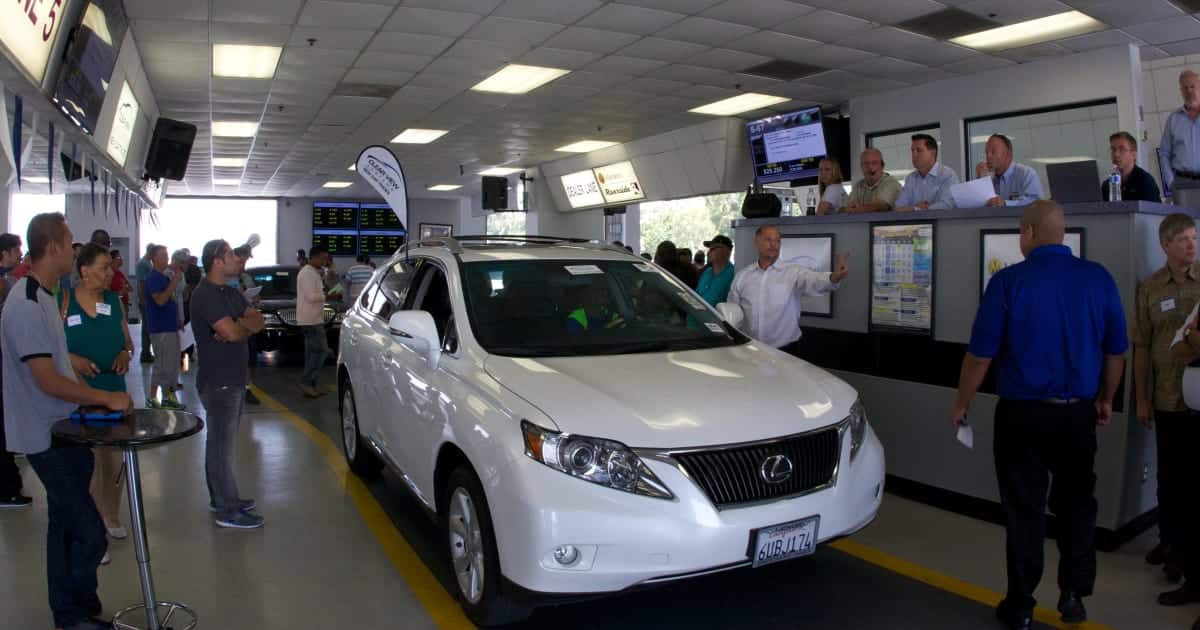
Every used car in America effectively trades in two markets at once, and only one of them is visible to shoppers. The one drivers see is retail: listings, lots, and asking prices taped to glass. The other is wholesale auction trading, where dealers buy and sell among themselves every working day, often without a single public listing, and that is the lane where the real number gets born.
That wholesale lane is where a car’s worth gets discovered week to week, and the retail price gets built directly on top of it. Dealers do not guess.
They pull a real time auction benchmark, most often the Manheim Market Report, which tracks what specific vehicles are actually selling for at auction in the current week by region, mileage, and condition. The sticker a shopper sees already has a wholesale number baked in, plus reconditioning cost, plus margin, repeated millions of times a year across every brand and body style on the road.
Inside the auction lanes that quietly move billions of dollars a week
The scale of that hidden market is enormous. A single national auction operator, Manheim, has described its operating network as 111 physical, digital, and mobile auction locations with 650 plus digital lanes, serving tens of thousands of dealers who log in daily to bid sight unseen on vehicles parked hundreds of miles away.
Through those channels, Manheim has said it offers 8 million vehicles for sale to dealers in a given year, representing nearly 80 billion dollars in value. Because those are real transactions and not asking prices, the resulting index behaves like a stock ticker for used cars.
The National Auto Auction Association’s most recent Market Intelligence Report found that member auctions sold more than 8 million vehicles last year, with total sales topping 100 billion dollars and an average hammer price of $13,800. Even the appraisal step gets quantified: valuation providers in the industry apply daily VIN specific pricing using hundreds of data points per car, folding in accident and ownership records that move the number for that exact vehicle, not just its model line.
What the published index actually shows, straight from the source
The clearest proof the mechanism works in real time sits in the published numbers themselves. As of mid November, the Manheim Used Vehicle Value Index was unchanged at 206.8 in the first fifteen days of the month compared to October, and higher by 0.7 percent compared with November a year earlier, built on a published mid month trends report.
That tracking is not a side project. The index measures wholesale used vehicle prices independent of shifts in vehicle characteristics, and it is generally published on the fifth business day of each month as an early indicator of the retail market ahead.
Supply moves with the feed too. Wholesale days’ supply fell to roughly 27.9 days in the first half of November, slightly below the level seen a year earlier.
Where the system breaks down and prices stop tracking the feed
Even so, the feed is not flawless, and segment by segment it can pull in opposite directions at once. In the most recent full month reading, EVs were up 6.6 percent from a year ago, all other vehicles were up 1.1 percent, while light duty trucks were down 4.3 percent before adjustments, proof that one sticker formula does not fit every vehicle type.
Yet the auction price only tells half the story a buyer actually needs. A separate layer, the vehicle history report, pulls from national and state databases, insurers, law enforcement agencies, service facilities, and auction platforms, and that record can swing the wholesale number sharply for an individual VIN.
Our used sedan report coverage found some sellers cannot guarantee a clean crash record exists at all. So two identical sedans at the same mileage can carry very different wholesale numbers once the feed accounts for prior damage, a fleet past, or rental history. The system prices the record, not just the metal.
What this means for anyone about to buy or sell a used car
None of this is secret in the way a trade practice sometimes is. Public auction operators post daily updates, and shoppers who want the raw feed rather than a dealer’s markup can read the published index themselves, the same one dealers check before they ever set foot on a lot.
That transparency gives ordinary buyers real negotiating leverage they rarely use. Checking the current wholesale print before negotiating can reveal whether a sticker still carries reasonable padding, or whether it has drifted far above what the car traded for last week, the same gap that shows up in recent wholesale used car price tracking.
So the next sedan that rolls onto a lot carries a number decided somewhere else entirely, hours or days earlier. Buyers who open that feed tend to walk in with a far stronger idea of what the car is really worth.
